Secondary School | Empowering Young Minds | Beaconhouse Sri Inai International School
LEARNING

Secondary Years

OVERVIEW

As students enter Secondary School, they are empowered to think critically, communicate confidently, and embrace a global perspective while building the knowledge, character, and skills needed for future success.


The Senior School pathway nurtures adolescent learners through secondary tiers. By combining national exam requirements with advanced analytical specialisations, we focus on linguistic capabilities, digital tools, and exam mastery, engineering a launchpad for local or international higher education.


Enrol Now
SUBJECTS INCLUDED

Year 7-9 Subjects

During the KS3 programme all subjects are compulsory with the exception of mandarin and French. Once students enter year 10 they follow a compulsory core curriculum alongside a programme of elective subjects. A brief outline of each subject can be found below.

  • Malay

  • English

  • Mathematics

  • Moral

  • Islamic Studies

  • History

  • Science

  • Visual Arts

  • Mandarin

  • Tamil

  • Computer Science

  • Information Technology

  • Geography

  • Physical & Health Education

SUBJECTS INCLUDED

Year 10-11 Subjects

During the KS3 programme all subjects are compulsory with the exception of mandarin and French. Once students enter year 10 they follow a compulsory core curriculum alongside a programme of elective subjects. A brief outline of each subject can be found below.

  • Malay

  • English

  • Mathematics

  • Moral

  • History

  • Science

  • Visual Arts

  • Biology

  • Chemistry

  • Physical & Health Education

  • Computer Science

  • Information Technology

  • Islamic Studies

  • Principles of Accounting

  • Economics

  • Additional Maths

  • Physics

Islamic Studies (for Muslim students)

Deepens spiritual knowledge, Islamic jurisprudence, and ethical behaviour, guiding students to live as principled individuals grounded in faith.

Learn More

Moral Education (for non-Muslim students)

Focuses on universal moral values, civic duties, and human rights, encouraging critical reflection on ethical dilemmas and social responsibilities.

Learn More

Science

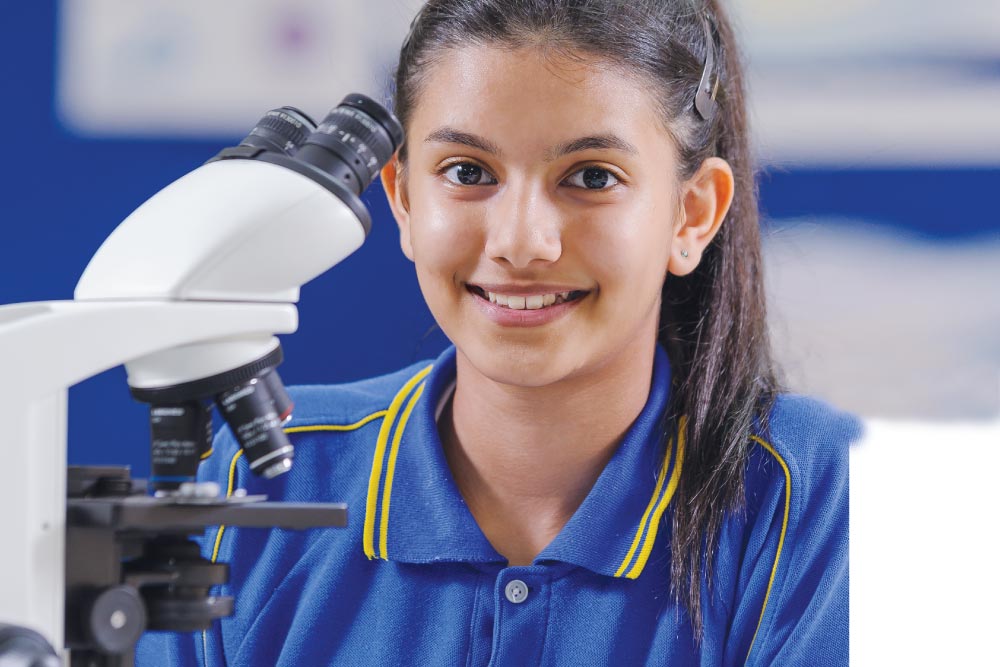
Provides a broad and balanced foundation across the primary branches of science, encouraging analytical thinking and an understanding of the natural world.

Learn More

Computer Science

Delves into the logic of coding, algorithms, and computational thinking, teaching students how to design software and understand technology from the inside out.

Learn More

Information Technology (IT)

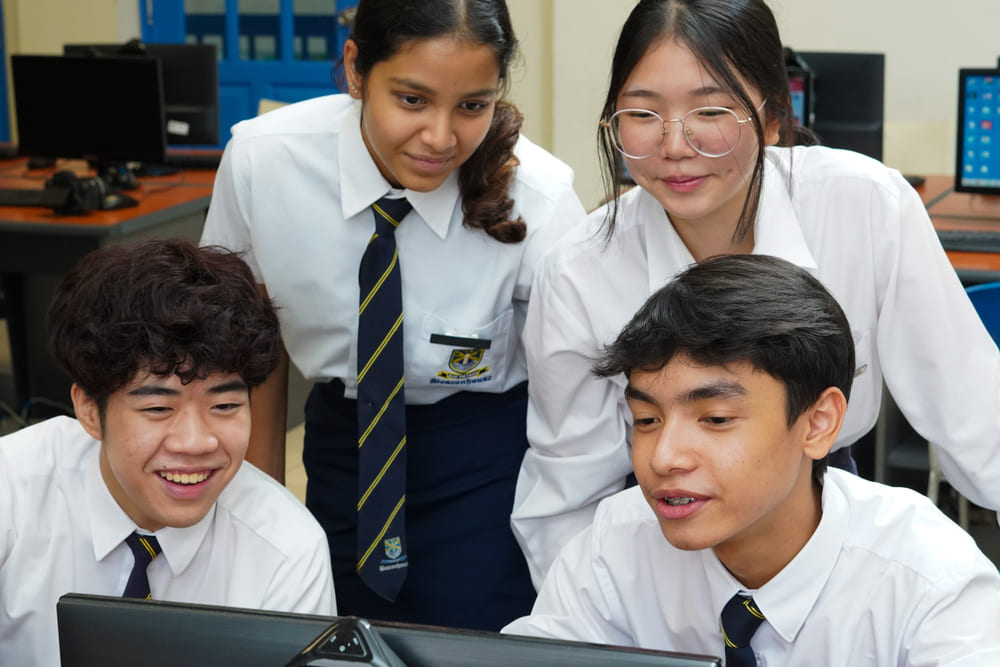
Focuses on digital literacy, information management, and the practical application of tech tools to prepare students for an increasingly digitised workforce.

Learn More

Physical & Health Education

Promotes physical fitness, strategic thinking through sports, teamwork, and an understanding of personal health, hygiene, and mental well-being.

Learn More

History

Analyses national and global historical events, cultivating critical thinking, source evaluation, and a mature perspective on how the past informs the present.

Learn More

Geography

Examines the physical environments of the Earth, human populations, and environmental sustainability, fostering global citizenship and spatial awareness.

Learn More

Mandarin & Tamil

Offered to sharpen multilingual capabilities, enhancing cognitive agility and providing a distinct communication advantage in a diverse world.

Learn More

Mathematics

Strengthens core algebraic, geometric, and statistical thinking, training students to analyse data and solve complex, real-world problems.

Learn More

Malay

Focuses on advanced mastery of the national language, encompassing complex essay writing, literary analysis, and fluent debate to instill a deep appreciation for national heritage.

Learn More

English

Develops superior language proficiency, critical analysis of literature, and persuasive communication skills, ensuring students are ready for higher education global standards.

Learn More

IGCSE English

As students move onto the IGCSE curriculum in Year 10, the Cambridge IGCSE First Language English offers students the opportunity to respond with understanding to a rich array of reading texts during the course as a whole. They will use these texts to inform and inspire their own writing and write in a range of text types for different purposes and audiences. Students will develop both their speaking and their listening skills, delivering a presentation, and responding to questions and engaging in conversations. Students are encouraged to become appreciative and critical readers, writers, speakers and listeners.

Learn More

Additional Mathematics

Introduces advanced concepts like calculus, trigonometry, and mathematical modelling, providing the essential foundation required for engineering, finance, and STEM fields.

Learn More

IGSCE Science

Once a student completes year 9 they may opt for one or more of the pure sciences as an elective subject to study for IGCSE.

Learn More

Biology

Explores the intricate systems of living organisms, genetics, ecosystems, and human physiology through detailed theoretical study and practical laboratory work.

Learn More

Physics

Examines the fundamental laws governing the universe, focusing on mechanics, energy, waves, and electricity to understand how things work on a macroscopic and microscopic scale.

Learn More

Cambridge IGCSE Bahasa Malaysia

The Cambridge IGCSE First Language Malay syllabus is for learners whose first language is Malay. This First Language syllabus develops a student's ability to communicate clearly, accurately and effectively. They learn how to employ a wide-ranging vocabulary, use correct grammar, spelling and punctuation, and develop a personal style and an awareness of the audience being addressed. Learners are also encouraged to read widely, both for their own enjoyment and to develop an appreciation of how writers achieve their effects. The syllabus also complements other areas of study by encouraging skills of more general application.

Learn More

Physical Education

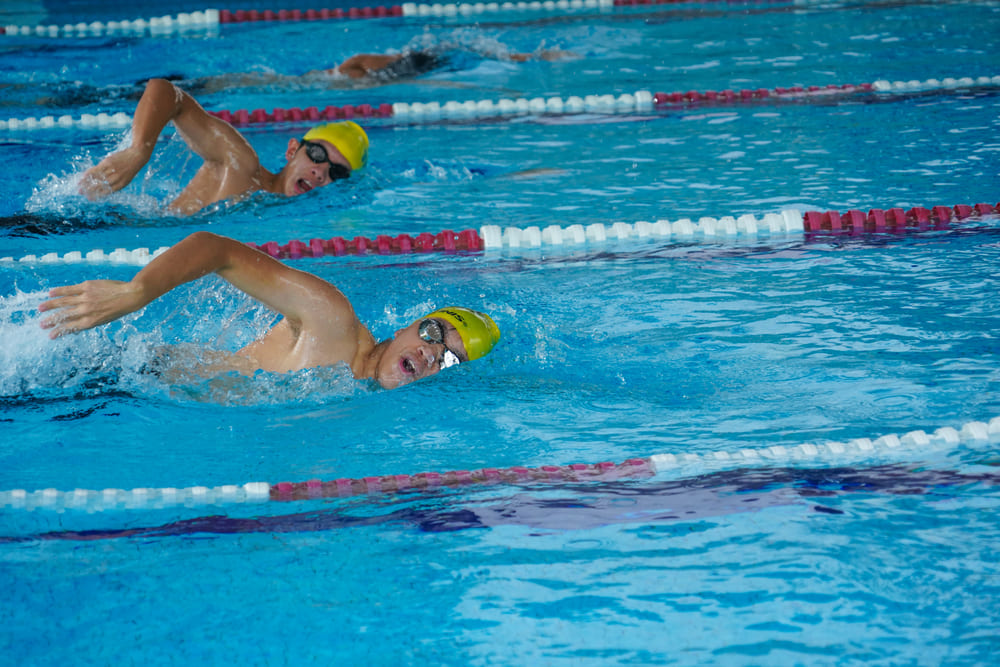
Physical education is a vital part of a balanced school curriculum. Regular exercise improves both physical and mental health and there is growing evidence that it improves academic performance across the curriculum. Establishing good patterns of exercise also provides learners with the foundation of an active and healthy lifestyle for life. All students take part in the physical education and swimming programme.

Learn More

ICT

The Information, Communication and Technology programme incorporates the Cambridge Primary Digital Literacy curriculum and the Cambridge Primary Computing curriculum.

Learn More

Visual Arts

Encourages creative expression, design principles, and artistic mastery across various media, allowing students to refine their personal aesthetic and creative thinking.

Learn More

Chemistry

Investigates the composition, structure, and properties of matter, driving analytical problem-solving through the study of chemical reactions and elements.

Learn More

IGCSE History

Students may then consider continuing with the Cambridge IGCSE curriculum.

Learn More

IGCSE Global Perspectives

Cambridge IGCSE Global Perspectives provides opportunities for enquiry into, and reflection on, key global issues from different perspectives: personal, local/national and global. It encourages awareness of global problems and offers a range of opportunities to explore solutions through cooperation and collaboration. The course is not about getting everybody to think identically; rather it is a matter of opening minds to the complexity of the world and of human thought and encouraging empathy for the diversity of human experience and feeling.

Learn More

IGCSE French

Once students enter Year 10 they may elect to continue with French and work towards the Cambridge IGCSE Foreign Language qualification. Cambridge IGCSE French develops a set of transferable skills for understanding and communicating in everyday situations in French. Students begin to develop cultural awareness of countries and communities where French is spoken. They acquire the essential linguistic skills required for progression to further studies or employment.

Learn More

Principles of Accounting

Introduces the fundamentals of financial management, bookkeeping, and ledger balancing, teaching students how to interpret and maintain precise business records.

Learn More

Economics

Explores micro and macroeconomic concepts, market forces, consumer behaviour, and global trade systems, giving students a clear insight into resource allocation.

Learn More

Additional Mathematics IGCSE (0606)

Students may opt to study Economics as part of their IGCSE Programme. The course is run over two years and culminates in the IGCSE examination at the end of Year 11.

Learn More

IGCSE Music

In Year 10 students are able to opt for the IGCSE music course. Within this syllabus, students listen to, perform and compose music, encouraging aesthetic and emotional development, self-discipline and, importantly, creativity. As a result, learners enhance their appreciation and enjoyment of music, an achievement that forms an ideal foundation for future study and enhances lifelong musical enjoyment.

Learn More

IGCSE Physical Education

The IGCSE Physical Education curriculum is a balance of practical and theoretical aspects of sport. Students complete a written examination, coursework and perform skills and game play in four sports. The students may choose sports that are team games or individual but must adhere to the groupings set out by Cambridge.

Learn More
  • Secondary – Islamic Studies
    Lower Secondary Islamic Studies

    Students who follow this course in lower secondary will enable them to acquire knowledge of the major sources of Islam, its main beliefs and its early history. They will develop an enquiring approach to the study of Islam and be able to identify and explore the religious, historical and moral questions raised in the material they study.

    The study will focus on

    1. Major themes of the Qur’an; The history and importance of the Qur’an:
    2. The life and importance of the Prophet Muhammad (PBUH)
    3. The first Islamic community; Stories of The Prophets
    4. Adab, manners of a Muslim.
    5. Ibadah; Pillars of Islam and Pillars of Iman.
  • Secondary – Science
    Lower Secondary Science

    The Cambridge Lower Secondary Science curriculum supports students in developing a lifelong curiosity about the natural world and enables them to seek scientific explanations for the phenomena around them.

    Students develop a holistic approach to science by considering scientific thinking and practical skills alongside knowledge and understanding which is vital for explaining the world around us. This approach provides students with the knowledge and skills they require to access and excel at science in later phases of education.

    A unique feature of the Cambridge Lower Secondary Science curriculum is a strand called Science in Context which supports demonstrating the relevance of science. Improving students’ awareness of science in the world around them develops their sense that ‘science is for me’ and starts students on a journey of connecting themselves to the subject. Students will be able to describe, explain and investigate the world around them at an age-appropriate level. They will systematically develop their scientific knowledge through the strands Biology, Chemistry, Physics and Earth and Space while developing scientific practices through the Thinking and Working Scientifically strand.

    An understanding of science through these strands of study gives students knowledge and skills to prepare them for the future and to make informed choices on sustainability issues and the challenges facing our environment.

    During the Lower Secondary curriculum student progress is assessed against the clear learning objectives set by Cambridge through classwork, projects and presentations as well as end-of-unit assessments and Cambridge progression tests. At the end of Year 9 students will sit for the Cambridge Lower Secondary Checkpoint assessment which tests knowledge and understanding of the Year 9 syllabus. This assessment is marked by Cambridge.

  • Secondary – ICT 7-9
    ICT

    The Information, Communication and Technology programme incorporates the Cambridge Primary Digital Literacy curriculum and the Cambridge Primary Computing curriculum.

    This enables learners to become accomplished users of digital tools and to understand the digital world that they are growing up in. Learners will develop the skills to create digital artifacts with increasing proficiency and sophistication. They will become equipped to join the digital world and will be increasingly able to make important decisions about their own safety and well-being.
    As part of the Computing curriculum learners develop a technical understanding of computer systems where processes are increasingly undertaken by computer-controlled technology. This includes opportunities for developing programs of their own, using languages such as Scratch and Python.
    Through digital literacy, students will acquire the knowledge and understanding that will equip them to respond to, and evaluate, the technology of the future. They will also understand the value of being digitally connected.

    Staying safe is an important aspect of all digital activity and learners will develop the knowledge that they will need to protect themselves and their devices and to demonstrate concern and respect for others.

    Through the computing curriculum students will understand the role of each physical part of a computer system and how software drives what happens inside each of those parts, and develop logical thinking skills, including decomposition, abstraction, pattern recognition and precision. Learners can apply these thinking skills across all areas of their education, including in Computing where they are used in the creation of computer programs, starting with simple sequences of instructions using a fun and visual programming language.

    Students can then opt to follow the IGCSE Information, Communication and Technology course. The IGCSE ICT course aims to enable students to develop an understanding of the basic components, use and application of different ICT systems and networks. It gives them the skills to analyse, design, implement, test and evaluate ICT systems as well as to understand the impact of current and new technologies on methods of working in the outside world. Students will be able to recognise potential risks when using ICT, and use safe, secure and responsible practice.

    The subject is examined both practically and theoretically.

  • Secondary – PSHE - 7-9
    Physical Education

    Physical education is a vital part of a balanced school curriculum. Regular exercise improves both physical and mental health and there is growing evidence that it improves academic performance across the curriculum. Establishing good patterns of exercise also provides learners with the foundation of an active and healthy lifestyle for life. All students take part in the physical education and swimming programme.

    The focus of the Cambridge physical education curriculum is on the depth of skills rather than referring to particular activity types or sports, allowing our teachers to choose activity types and sports that best suit our students.

    The six strands of the Cambridge Lower Secondary Physical Education Curriculum Framework support the development of the student as a whole person – physically, cognitively and socially. They can be applied to a range of activity types including gymnastics, dance, athletics, adventurous activities and team games.

    All strands develop knowledge, understanding, skills, values and attitudes that enable learners to become competent, confident and creative movers. They also all promote an inclusive, learner-centred approach where the potential and contributions of every individual are recognised and celebrated. They aim to encourage learners’ enjoyment of a variety of physical activities throughout their lives.

    During the lessons, students will develop their skills and understanding of leadership, collaboration and fair play through a range of team and group activities. They use these skills to help others to participate and achieve, sometimes leading and sometimes following others. They learn how to offer constructive and specific feedback to others, identifying strengths and suggesting future movement goals.

    As well as the timetabled lessons students are able to join extra-curricular activities in a variety of sports and as they become proficient join school teams. Tele-match and sports days are both popular events as well as different inter-house competitions where children of all ages can represent their houses.
    Cambridge provides structured learning objectives for all stages which allow us to measure the student’s progress. They are structured to accommodate the physical, cognitive and social development of students at all levels of primary.

  • Secondary – History
    Lower Secondary History

    History will help students to gain a coherent knowledge and understanding of Britain’s past and that of the wider world. It should inspire pupils’ curiosity to know more about the past. Students will be equipped to ask perceptive questions, think critically, weigh evidence, sift arguments, and develop perspective and judgement. History helps pupils to understand the complexity of people’s lives, the process of change, the diversity of societies and relationships between different groups, as well as their own identity and the challenges of their time.

    Students learn how to ask questions skilfully and understand the causes and consequences of events, the significance of individuals and the extent of change. Through the study of themes such as power, revolution and conflict, pupils learn how history is interpreted in various ways and how to recognise and understand different views. Teaching equips pupils to develop empathy, understand the actions and achievements of others, put forward and argue a case and use evidence to draw conclusions and make judgements.

    During the three-year course, students will study the following periods of history

    1. Medieval British and World History (410-1509)
    2. Early Modern Britain (1509-1760)
    3. Twentieth-Century World History
  • Secondary – Geography
    Lower Secondary Geography

    The curriculum allows students to develop contextual knowledge of the location of globally significant places – both terrestrial and marine – including their defining physical and human characteristics and how these provide a geographical context for understanding the actions of processes.

    Students become competent in the geographical skills needed to: collect, analyse and communicate with a range of data gathered through experiences that deepen their understanding of geographical processes. They will develop their skills to be able to interpret a range of sources of geographical information, including maps, diagrams, globes, aerial photographs and Geographical Information Systems (GIS).

  • Secondary – Mandarin
    Lower Secondary Mandarin

    Mandarin is taught throughout the school and is available at 3 levels. Students acquire the essential linguistic skills required for progression to further studies or employment.

    Students will study the four elements that are necessary for daily life, which are listening, speaking, reading and writing. Throughout the course, students will develop the language proficiency required to communicate effectively in Mandarin Chinese. They are able to offer insights into the culture and society of countries and communities where Chinese is spoken as well as develop an awareness of the nature of language and language learning.

    The subject content is organised in five broad topic areas which provide contexts for the acquisition of vocabulary and the study of grammar and structures. The study of these topic areas enables students to gain an insight into countries and communities where Chinese is spoken. The five topic areas include everyday activities, personal and social life, the world around us, the world of work and the international world.

  • Secondary – Mathematics
    Lower Secondary Mathematics

    Cambridge Lower Secondary mathematics encourages a lifelong enthusiasm for analytical and rational thinking. Students develop a holistic understanding of the subject, focusing on principles, patterns, systems, functions and relationships. Students become mathematically competent and fluent in computation which they can apply to everyday situations.

    A unique feature of the Cambridge Mathematics curriculum is ‘Thinking and Working Mathematically’. The process of thinking and working mathematically encourages students to talk with others, challenge ideas and provide evidence that validates conjectures and solutions.

    Students will systematically develop their mathematical skills in Number, Algebra, Geometry and Measure, and Statistics and Probability. When students are thinking and working mathematically they actively seek to make sense of ideas and build connections between different facts, procedures and concepts.

    The Number strand is the foundation of the mathematics curriculum. Students explore the number system and develop fundamental calculation skills enabling them to compute increasingly complex calculations.

  • Secondary – Bahasa Malaysia
    Lower Secondary Bahasa Malaysia

    The course is taught at 2 levels, foreign and first language. Students will study at the level which suits them best given their prior knowledge and current use of the language.

    Learning Malay is an active process that involves engaging with others and understanding how to communicate with local communities. The aim is to develop an ability to use the language effectively for practical communication. The course is based on the linked language skills of listening, reading, speaking and writing, and these are built on as learners progress through their studies. The syllabus also aims to offer insights into the culture of countries where Malay is spoken, thus encouraging positive attitudes toward language learning and towards speakers of other languages.

  • Secondary – English
    Lower Secondary English

    Cambridge Secondary English empowers students in their application of English and encourages a life-long enthusiasm for reading, writing and spoken communication. It develops communication skills in English that students can apply in everyday situations and in their studies.

    Together the reading, writing, speaking and listening skills acquired through Cambridge Secondary English support students’ overall intellectual, creative and social development. The curriculum develops confident and inquisitive readers who enjoy reading for pleasure, and are able to access information from texts and make decisions about its reliability. Reading and discussing a wide range of texts with diverse themes, and from different contexts, supports students’ independent reading choices and their cultural, social and emotional development.

    Students develop speaking and writing skills that enable them to share their understanding, ideas and feelings clearly and accurately in English. By analysing, evaluating and discussing spoken and written texts, students gain competence in adapting their communication creatively and effectively for different audiences and purposes.

  • IGCSE - English
    IGCSE English

    As students move onto the IGCSE curriculum in Year 10, the Cambridge IGCSE First Language English offers students the opportunity to respond with understanding to a rich array of reading texts during the course as a whole. They will use these texts to inform and inspire their own writing and write in a range of text types for different purposes and audiences. Students will develop both their speaking and their listening skills, delivering a presentation, and responding to questions and engaging in conversations. Students are encouraged to become appreciative and critical readers, writers, speakers and listeners.
    As they move through secondary school the students will be assessed against the Cambridge learning objectives using the Cambridge set progression tests. At the end of Year 9 students sit the Cambridge Lower Secondary Checkpoint assessments which test knowledge and understanding giving the students feedback on areas of strength and areas where they may need more focus. In Year 11 students will sit the IGCSE papers which test their writing skills and their ability to read, interpret and respond to different styles of writing.

  • Secondary – Mathematics – 10-11
    IGCSE Mathematics

    Students will sit the Cambridge progression tests each year which assess knowledge and understanding of the topics. At the end of Year 9 students will sit the Cambridge Lower Secondary Checkpoint assessment which is marked by Cambridge. Students will then follow the Cambridge IGCSE Mathematics curriculum in Years 10-11 and will be assessed against clear learning objectives set by Cambridge through their classwork and independent study. As they move onto the IGCSE course students will sit the examination at the end of Year 11.

  • IGCSE - Science
    IGCSE Science

    Once a student completes year 9 they may opt for one or more of the pure sciences as an elective subject to study for IGCSE.

  • Secondary – Biology – 10-11
    Cambridge IGCSE Biology

    Biology is the study of living things and their vital processes. It encompasses the cellular basis of living things, the energy metabolism that underlies the activities of life, and the genetic basis for inheritance in organisms. Biology also includes the study of evolutionary relationships among organisms and the diversity of life on Earth. It considers the biology of microorganisms, plants, and animals, for example, and it brings together the structural and functional relationships that underlie their day-to-day activities.

    Cambridge IGCSE Biology allows students to understand the biological influence of the world they live in and take part in science and scientific developments. The syllabus emphasises the basic principles and concepts that are important to the subject, current applications of biology, and a strong emphasis on practical skills. Students develop an understanding of scientific skills which will be helpful in the progression to further study or a career related to science.

    Through their study, students will develop observational and problem-solving skills, appreciate how scientific theories are developed and tested, and transfer the experimental skills acquired to unfamiliar contexts. Students develop positive scientific attitudes such as objectivity, integrity, cooperation, enquiry and inventiveness, developing their interest and enjoyment in science.
    Students are assessed to ensure progress in their knowledge and understanding of the topics. Cambridge provides clear learning objectives which ensure student progress can be measured in the lead-up to the IGCSE examination at the end of year 11. The IGCSE examination comprises 3 papers that test the student’s ability to apply their knowledge and understanding to different situations.

  • IGCSE - Cambridge IGCSE Bahasa Malaysia
    Cambridge IGCSE Bahasa Malaysia

    The Cambridge IGCSE First Language Malay syllabus is for learners whose first language is Malay. This First Language syllabus develops a student’s ability to communicate clearly, accurately and effectively. They learn how to employ a wide-ranging vocabulary, use correct grammar, spelling and punctuation, and develop a personal style and an awareness of the audience being addressed. Learners are also encouraged to read widely, both for their own enjoyment and to develop an appreciation of how writers achieve their effects. The syllabus also complements other areas of study by encouraging skills of more general application.

    Students studying Malay at either level develop the language proficiency required to communicate effectively in Malay whilst being able to offer insights into the culture and society of countries and communities where Malay is spoken. They will develop an awareness of the nature of language and language learning and positive attitudes toward speakers of other languages and a sympathetic approach to other cultures.

  • Secondary – P.E. (Non examination) – 10-11
    P.E. (Non examination)

    Physical education is a vital part of a balanced school curriculum. Regular exercise improves both physical and mental health and there is growing evidence that it improves academic performance across the curriculum. Establishing good patterns of exercise also provides learners with the foundation of an active and healthy lifestyle for life. All students take part in the physical education and swimming programme.

    The focus of the Cambridge physical education curriculum is on the depth of skills rather than referring to particular activity types or sports, allowing our teachers to choose activity types and sports that best suit our students.

    The six strands of the Cambridge Lower Secondary Physical Education Curriculum Framework support the development of the student as a whole person – physically, cognitively and socially. They can be applied to a range of activity types including gymnastics, dance, athletics, adventurous activities and team games.

    All strands develop knowledge, understanding, skills, values and attitudes that enable learners to become competent, confident and creative movers. They also all promote an inclusive, learner-centred approach where the potential and contributions of every individual are recognised and celebrated. They aim to encourage learners’ enjoyment of a variety of physical activities throughout their lives.

    During the lessons, students will develop their skills and understanding of leadership, collaboration and fair play through a range of team and group activities. They use these skills to help others to participate and achieve, sometimes leading and sometimes following others. They learn how to offer constructive and specific feedback to others, identifying strengths and suggesting future movement goals.

    As well as the timetabled lessons students are able to join extra-curricular activities in a variety of sports and as they become proficient join school teams. Tele-match and sports days are both popular events as well as different inter-house competitions where children of all ages can represent their houses.

    Cambridge provides structured learning objectives for all stages which allow us to measure the student’s progress. They are structured to accommodate the physical, cognitive and social development of students at all levels of primary.

  • Secondary – ICT – 10-11
    ICT

    The Information, Communication and Technology programme incorporates the Cambridge Primary Digital Literacy curriculum and the Cambridge Primary Computing curriculum.

    This enables learners to become accomplished users of digital tools and to understand the digital world that they are growing up in. Learners will develop the skills to create digital artifacts with increasing proficiency and sophistication. They will become equipped to join the digital world and will be increasingly able to make important decisions about their own safety and well-being.
    As part of the Computing curriculum learners develop a technical understanding of computer systems where processes are increasingly undertaken by computer-controlled technology. This includes opportunities for developing programs of their own, using languages such as Scratch and Python.

    Through digital literacy, students will acquire the knowledge and understanding that will equip them to respond to, and evaluate, the technology of the future. They will also understand the value of being digitally connected.

    Staying safe is an important aspect of all digital activity and learners will develop the knowledge that they will need to protect themselves and their devices and to demonstrate concern and respect for others.

    Through the computing curriculum students will understand the role of each physical part of a computer system and how software drives what happens inside each of those parts, and develop logical thinking skills, including decomposition, abstraction, pattern recognition and precision. Learners can apply these thinking skills across all areas of their education, including in Computing where they are used in the creation of computer programs, starting with simple sequences of instructions using a fun and visual programming language.

    Students can then opt to follow the IGCSE Information, Communication and Technology course. The IGCSE ICT course aims to enable students to develop an understanding of the basic components, use and application of different ICT systems and networks. It gives them the skills to analyse, design, implement, test and evaluate ICT systems as well as to understand the impact of current and new technologies on methods of working in the outside world. Students will be able to recognise potential risks when using ICT, and use safe, secure and responsible practice.

    The subject is examined both practically and theoretically.

  • IGCSE - IGCSE Art & Design
    IGCSE Art & Design

    Students can continue with Art and Design in Year 10 and follow the IGCSE course. They will be able to focus on using the media of their choice in response to different questions and stimuli around them. The assessment in Year 11 is divided into 2. Students must research their ideas and create visuals of their development journey before presenting their final piece. Students learn to analyse, reflect and review their work demonstrating their knowledge and understanding of their chosen topic. All work is assessed by Cambridge.

  • IGCSE - IGCSE Chemistry
    IGCSE Chemistry

    Chemistry is the study of matter and the substances that constitute it. Cambridge IGCSE Chemistry allows learners to increase their understanding of the technological world they live in and take an interest in scientific matters. The syllabus teaches the basic principles and concepts that are fundamental to the subject, some current applications of chemistry, and develops an understanding of the scientific skills essential for both further study and everyday life.

    Cambridge IGCSE Chemistry develops a set of transferable skills including handling data, practical problem-solving and applying the scientific method. Learners develop relevant attitudes, such as concern for accuracy and precision, objectivity, integrity, enquiry, initiative and inventiveness. They acquire the essential scientific skills required for progression to further studies or employment.

    During the course of study, the students will develop a range of experimental skills, including handling variables and working safely. They will use scientific data and evidence to solve problems and discuss the limitations of scientific methods whilst communicating effectively and clearly, using scientific terminology, notation and conventions. As they acquire the knowledge they understand that the application of scientific knowledge can benefit people and the environment and develop an informed interest in scientific matters which support further study.

    Students will sit three papers and these are differentiated into core or extended. Throughout the 2 years students are assessed in their knowledge and understanding against the comprehensive learning objectives set by Cambridge.

  • IGCSE - IGCSE History
    IGCSE History

    Students may then consider continuing with the Cambridge IGCSE curriculum.

    Cambridge IGCSE History offers the opportunity to study world history from the nineteenth century to the beginning of the twenty-first century. It encourages learners to raise questions and to develop and deploy historical skills, knowledge and understanding in order to provide historical explanations. Learners will explore history from a diversity of perspectives, including social, economic, cultural and political, and are given the opportunity to develop an interest in and enthusiasm for learning about and understanding the past. They will explore historical concepts such as cause and consequence, change and continuity, and similarity and difference whilst learning to appreciate historical evidence and how to use it. Students will gain a greater understanding of international issues and inter-relationships and learn how to present clear, logical arguments.

    Students who sit for the IGCSE examination will sit 3 papers which include a chosen depth study.

  • IGCSE - IGCSE Global Perspectives
    IGCSE Global Perspectives

    Cambridge IGCSE Global Perspectives provides opportunities for enquiry into, and reflection on, key global issues from different perspectives: personal, local/national and global. It encourages awareness of global problems and offers a range of opportunities to explore solutions through cooperation and collaboration. The course is not about getting everybody to think identically; rather it is a matter of opening minds to the complexity of the world and of human thought and encouraging empathy for the diversity of human experience and feeling.
    Cambridge IGCSE Global Perspectives students will have opportunities to acquire and apply a range of skills to support them in these challenges, including researching, analysing and evaluating information, developing and justifying a line of reasoning, and reflecting on processes and outcomes.

    Students explore stimulating topics that have global significance. They learn to collaborate with others from another culture, community or country. They learn to direct their own learning and develop an independence of thought. They will develop an analytical, evaluative grasp of global issues and their causes, consequences and possible courses of action.

    As part of the course, students will work independently as well as part of a team, directing much of their own learning with the teacher as an active facilitator. They will produce two research projects, one in collaboration with others and one independently.

    Through these Cambridge-assessed projects, they will consider important issues from personal, local and/or national and global perspectives and understand the links between these. We want our students to be able to critically assess the information available to them and support judgements with lines of reasoning that they can communicate successfully.

  • IGCSE - French
    IGCSE French

    Once students enter Year 10 they may elect to continue with French and work towards the Cambridge IGCSE Foreign Language qualification. Cambridge IGCSE French develops a set of transferable skills for understanding and communicating in everyday situations in French. Students begin to develop cultural awareness of countries and communities where French is spoken. They acquire the essential linguistic skills required for progression to further studies or employment.
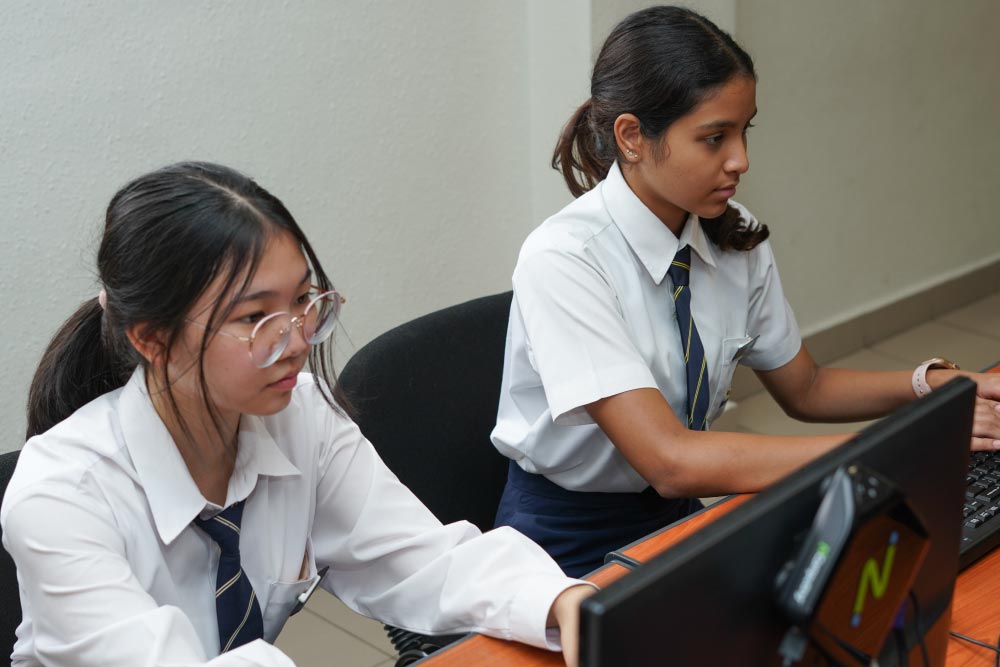
    Students will be expected to read and understand a variety of written and spoken texts on familiar topics. Students will be required to demonstrate an understanding of the main ideas, opinions and attitudes, as well as select and extract relevant details and deduce the meaning of occasional unknown words from context. They will also have opportunities to write in French on familiar, everyday topics, and to speak the language by taking part in everyday conversations.

  • IGCSE - Accounting
    IGCSE Accounting

    Students may opt to study accounting at IGCSE during Years 10 and 11. The course is a two-year course that culminates in the IGCSE examination at the end of Year 11.

    Accounting is a foundational element of business, linked to providing control, stability, and accountability to a company’s finances. It’s a role that will likely always be in demand. Their evolving role often requires expertise that goes beyond crunching numbers to also include knowledge of accounting systems, business valuations, cybersecurity, and mergers and acquisitions.

    During the course, the students gain knowledge and understanding of the principles and purposes of accounting for individuals, businesses, non-trading organisations and society as a whole. They will develop an understanding of accounting concepts, principles, policies, techniques, procedures and terminology whilst improving their skills of numeracy, literacy, communication, enquiry, presentation and interpretation. The course allows students to show improved accuracy, orderliness and the ability to think logically.

    In addition to the lessons, students may join the Entrepreneur club which allows them to practise their skills in real-life situations. This supports theoretical learning and prepares them for the examination. The IGCSE examination will test a student’s knowledge and understanding and will ask them to analyse data.

  • IGCSE - Economicsg
    IGCSE Economics

    Students may opt to study Economics as part of their IGCSE Programme. The course is run over two years and culminates in the IGCSE examination at the end of Year 11.

    Learning economics brings the market into the classroom where it is relevant and exciting to learn about how to make informed choices as a household, as a consumer, as a producer and as a responsible citizen. These choices pertain to consumption, production and exchange. Students learn about the causes and consequences of joblessness, rising prices, expanding or shrinking economies, and sustainability issues faced by all economies of the world. Students study significant issues, take into account other people’s viewpoints, and participate in lively conversations. They are expected to be able to read widely, be able to defend their positions, and have the courage to come to their own well-informed opinions because such matters are diverse and contentious. Universities and employers recognise the Cambridge IGCSE Economics exam as evidence of knowledge and comprehension of economics.

    In studying Economics students will gain:

    • an understanding of economic theory, terminology, and principles;
    • the capacity to apply the tools of economic analysis;
    • the capacity to differentiate between objective facts and subjective value judgments in economic issues;
    • an understanding of and capacity for using basic economic numeracy and literacy;
    • the capacity to participate more actively in decision-making processes in daily life; and
    • the capacity for using the tools of economic analysis.

    The IGCSE examination allows students to show their level of knowledge and understanding and to use these in the analysis of case studies.

    Co-curricular activities that support the Economics course include the entrepreneurship club, international day carnival, guest speakers on economic and business issues, field trips and competitive trading activities.

  • Secondary – Additional Mathematics IGCSE (0606) – 10-11
    Additional Mathematics IGCSE (0606)

    *Please note: Additional Mathematics is only available for students who are on course to achieve a Grade 6.0 in their year 9 checkpoint examination.

    The Cambridge IGCSE Additional Mathematics encourages students to further develop their mathematical ability in problem solving and provides a progression into advanced mathematics
    It reinforces the student’s competency, confidence, and fluency in their use of techniques with and without a calculator, strengthening mathematical understanding and communication skills. The course will enrich the student’s understanding of connections within mathematics, refining learners’ reasoning and analytical skills.

    In order to study at th=is level students require a fluent and confident ability to solve problems in abstract mathematics and in return it will progress a students’ ability to communicate mathematically and justify their reasons using structured arguments.

    The course aims to help students to consolidate and extend their mathematical skills, and use these in the context of more advanced techniques. They will be able to further develop their knowledge of mathematical concepts and principles, and use this knowledge for problem solving. The students learn to appreciate the interconnectedness of mathematical knowledge whilst acquiring a suitable foundation in mathematics for further study in the subject or in mathematics related subjects.

    Studying mathematics at this level will allow the student to develop their ability to devise mathematical arguments and use and present then precisely and logically; integrate information technology (IT) to enhance the mathematical experience; develop the confidence to apply their mathematical skills and knowledge in appropriate situations. They will develop creativity and perseverance in the approach to problem solving and derive enjoyment and satisfaction from engaging in mathematical pursuits, and gain an appreciation of the elegance and usefulness of mathematics

  • IGCSE - Music
    IGCSE Music

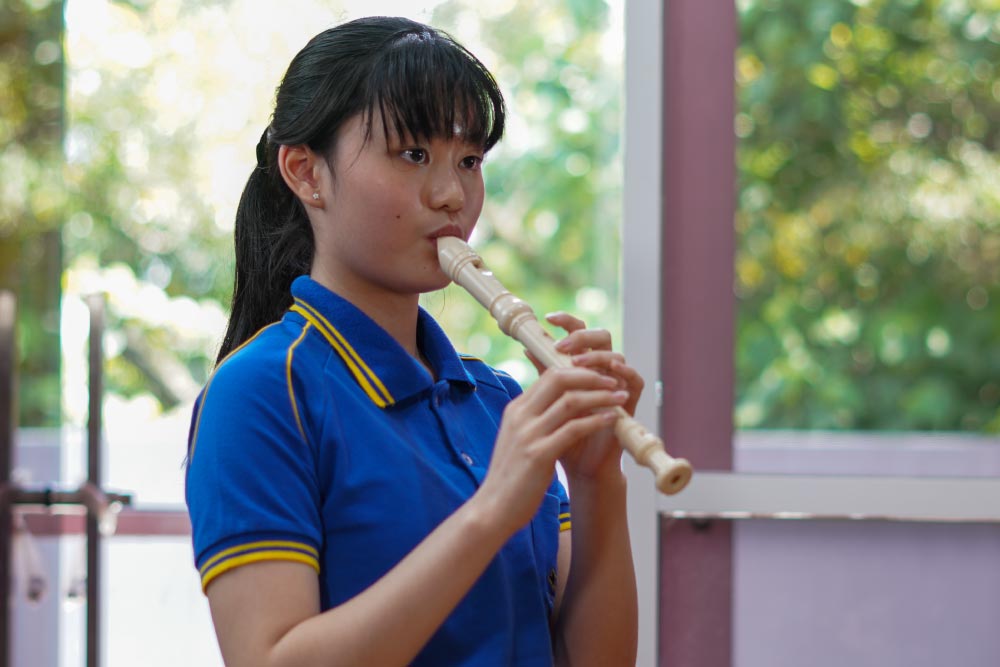
    In Year 10 students are able to opt for the IGCSE music course. Within this syllabus, students listen to, perform and compose music, encouraging aesthetic and emotional development, self-discipline and, importantly, creativity. As a result, learners enhance their appreciation and enjoyment of music, an achievement that forms an ideal foundation for future study and enhances lifelong musical enjoyment.

    The IGCSE examination is in 3 components. Students perform one piece individually and one as an ensemble. They will also complete a Music Final Project. They will also compose 2 contrasting pieces. The third aspect is a written paper with questions based on different pieces of music played through a CD. Students will need to show their level of knowledge and understanding in their responses.

    There are a number of different avenues for students to explore music outside the class lessons. We run choirs, ensembles, talent shows and musical productions.

    For students who are particularly talented musicians, we offer scholarships and support for their continued development. These can be applied for at the beginning of an academic year (T&Cs apply).

  • Secondary – IGCSE Physical Education – 10-11
    IGCSE Physical Education

    The IGCSE Physical Education curriculum is a balance of practical and theoretical aspects of sport. Students complete a written examination, coursework and perform skills and game play in four sports. The students may choose sports that are team games or individual but must adhere to the groupings set out by Cambridge. The course enables students to develop their knowledge and understanding of the theory underpinning physical performance in a modern world. They are able to use and apply this knowledge and understanding to improve their performance. They will be able to perform in a range of physical activities, developing skills and techniques, and selecting and using tactics, strategies and/or compositional ideas. As part of the course the importance of understanding and appreciating safe practice in physical activity and sport is covered. Students will understand and appreciate the benefit of physical activity and sport for health, fitness and well-being. This qualification will allow students to gain a sound basis for further study in the field of Physical Education.
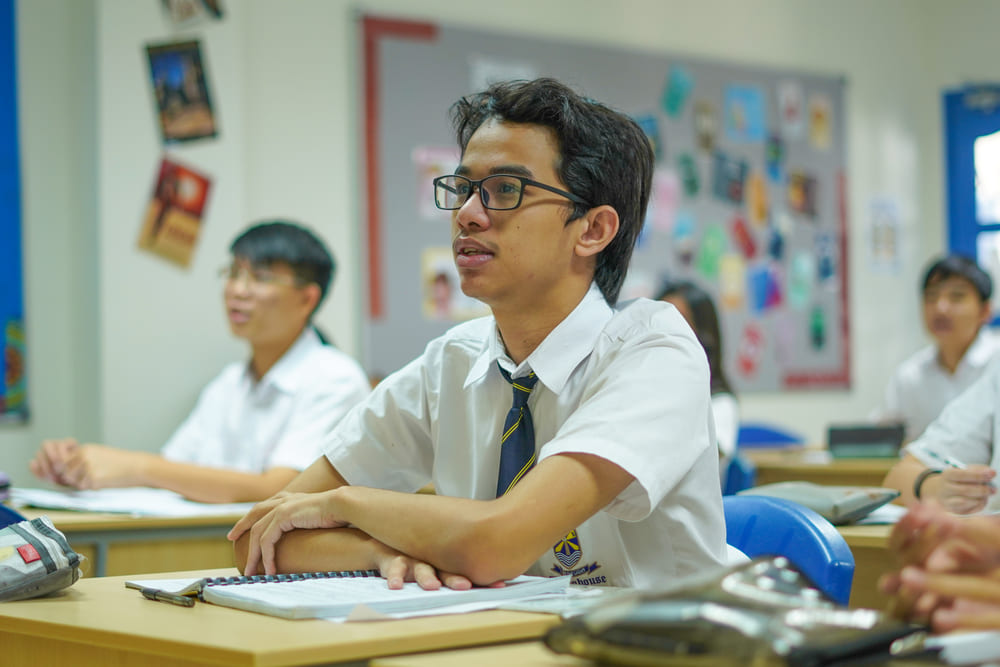
    During the course the following topics are covered:

    1. Anatomy and physiology
    2. Health, fitness and training
    3. Skill acquisition and psychology
    4. Social, cultural and ethical influences

    Students will also participate in sports as team members and are encouraged to develop all aspects of their sporting ability.